Digitizing business management: a concrete lever for saving time, improving reliability and boosting performance

Laure
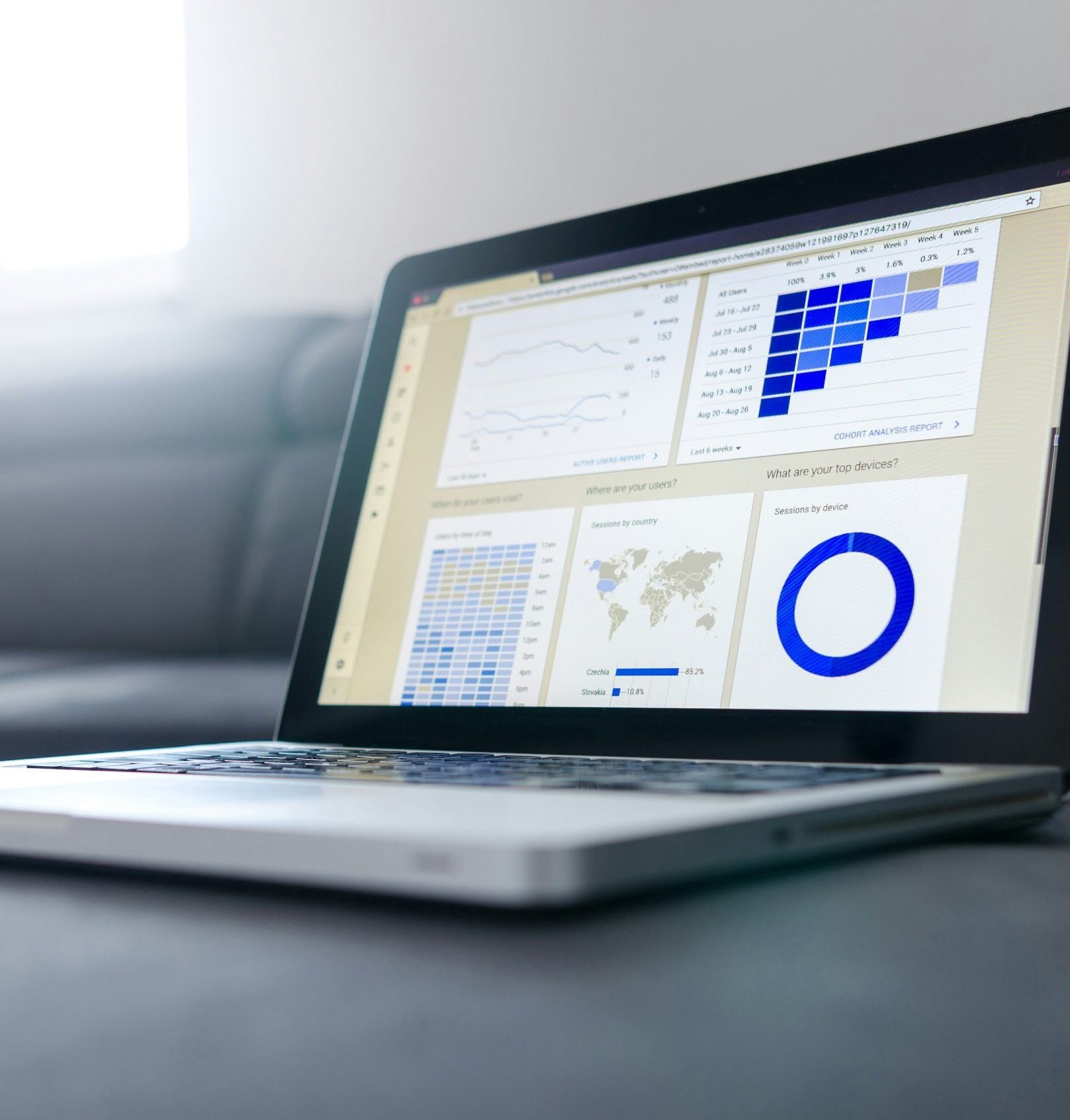
In sectors where performance depends on human coordination, such as private security, SAP or cleaning, every minute counts. Company managers and their operational teams are constantly juggling between schedule management, and customer expectations.
In this context, digitizing managing your business is no longer a distant project reserved for large organizations: it's a must if you want to remain competitive, reliable and profitable.
But where to start? And above all, what is digital transformation really change the day-to-day lives of managers and their teams?
Why traditional management limits company performance
Before talking about solutions, we need to identify the problem. Many service companies still operate with a stack of disparate tools: Excel files for scheduling, e-mail exchanges for instructions, paper documents for round reports, payroll software not connected to the rest of the information system... The result?
Information is fragmented, teams work in silos, and the operational visibility is deteriorating. Everyone has part of the truth, but no one has the whole picture.
Multiplication of tools and information silos
One of the first obstacles to performance in a multi-site organization is precisely this. multiplication of tools unconnected. A sales manager managing quotations on a spreadsheet, an operations manager tracking interventions on another piece of software, and an HR department processing absences by e-mail: this siloed way of working creates permanent breaks in information. Each employee wastes precious time searching for data that the organization should be able to centralize and share instantaneously.
Manual re-keying and risk of error
Manual re-keying is one of the most underestimated hidden costs in the company management services. When information is entered several times in different systems, the risk of error increases proportionally. An error on a shift hour, a customer billed at the wrong rate, an agent incorrectly assigned to a site: these seemingly minor discrepancies have real consequences on profitability, customer relations and compliance. Reducing re-typing means reduce errors, and the resulting corrective action, litigation and costs.
Lack of real-time visibility
A manager who makes decisions on the basis of partial information, or information that is several days old, is not piloting his company: he is suffering from it. The ability to react quickly relies on a vReal-time visibility of activity. Without the right tools, this responsiveness is impossible to achieve systematically.
Digitizing to save time every day
The first promise of digitalized business management is time. Time reclaimed from non-value-added tasks, redistributed to what really counts: management, customer relations and business development.
Automate repetitive tasks
Visit automated billing, real-time activity monitoring, the administrative management employees: all these tasks can be partially or fully automated using appropriate business software.
Automation does not replace teams: it frees them from time-consuming tasks so that they can concentrate on higher-value missions. An HR manager who no longer has to re-enter hours worked can devote this time to recruiting, retaining or training employees.
Centralize data in a single tool
Having a centralized tool in which all business data is accessible in a single place radically changes the day-to-day life of teams. No need to juggle several applications or ask a colleague for information. Visit schedule, customer contracts, hours worked regulatory documents Everything is in one place, structured and accessible to the right people. It's a tangible improvement in efficiency, measurable from the very first weeks of use.
Streamline coordination between teams
In a company, the communication between field teams, managers and top management is a critical issue. An agent who doesn't receive his instructions on time, a site manager who isn't informed of a schedule change, an operations manager who learns too late that a position is vacant: these situations degrade service quality and expose the company to operational risks. A digital tool The well-configured system makes these exchanges more fluid, structures communication and reduces the need for informal solicitations.
Making processes more reliable to secure your business
In addition to saving time, digitizing processes also means making them more reliable. It means moving from an organization based on individuals to one based on systems. This shift is essential for supporting growth without losing quality.
Standardize procedures
When procedures are not formalized and equipped, each employee interprets them in his or her own way. Standardizing business processes via a software ensures consistency in the execution of tasks, whatever the agent or site concerned. This is particularly strategic in a sector where regulatory compliance is a must, and where any deviation can have legal and commercial consequences.
Ensure traceability of actions
In some sectors, the traceability is an imperative. Every intervention, every round, every report must be traceable, dated and validated. A digital tool natively integrates this logic: it preserves the history of actions, enables tasks to be tracked in real time, and facilitates internal control. In the event of a dispute or audit, the data is there, reliable and accessible. It's a operational safety that paper-based systems simply can't offer.
Reduce errors and hidden costs
Fewer errors mean fewer corrections, fewer disputes, and better regulatory compliance. Visit hidden costs related to management errors are often underestimated in company balance sheets. Yet they weigh heavily on real profitability. Digitizing management means tackling these costs directly, structurally and sustainably.
From digitalization to measurable performance
The true value of a digital tool lies not in its functionality, but in the results it produces. And the good news is that these results are measurable.
Use data to manage your business
A manager who has reliable data, centralized and exploitable in real time makes better decisions. It can quickly identify under-performing sites, the busiest agents, the least profitable customers or at-risk positions. This ability to analyze transforms the way the company is managed, moving from a "one-stop shop" to a "one-stop shop". control from instinct to indicator-based management. Choices are more informed, actions more targeted, results more predictable.
Improving customer relations
A well-served customer is a customer who stays. Digitizing management directly improves quality of service perceived: intervention reports are transmitted in real time, anomalies are reported immediately, and requests are processed more quickly. Reactivity improves, as does reliability. And in a sector where trust is the primary criterion for choosing a service provider, this is a real plus. competitive advantage decisive.
Optimizing resources and time
Better visibility of activity also enables better allocation of human and material resources. Field staff are assigned in a more relevant way, schedules are optimized, and absences are anticipated rather than suffered. Organization becomes smoother, and teams work under better conditions. Which, in the end, reduces turnover and improves service quality.
Digitizing intelligently: avoiding over-digitization
It would be misleading to suggest that accumulating digital tools is all it takes to perform. The reality is more nuanced...and more demanding.
The dangers of tool stacking
Adding a new tool to an already complex system often exacerbates the problem rather than solving it. A CRM that doesn't talk to the scheduling software, a mobile application disconnected from the back-office, a reporting tool that imports data manually from another system: this piling up creates complexity, generates new errors and adds to the workload of the teams. The performance comes not from the number of digital tools, but from their coherence.
The importance of a structuring software base
What's needed is a foundation central software that links processes, data and teams in a single, coherent environment. A well-designed business ERP does just that: it structures the business, makes exchanges more fluid and enables operational performance to be steered in a sustainable way. It is precisely this logic that has guided the design of Groupe Senef solutions since their inception.
Groupe Senef: digitalization designed for operational performance
Groupe Senef is a publisher of business software solutions specialized in human-intensive service sectors. For over fifteen years, the group has been working with companies in the following sectors private security, of cleanliness, from personal services and autonomy and other demanding verticals. digital transformation. Not from theoretical models, but from realities on the ground.
Centralization of business processes
With Mushroom (private security), Progiclean (cleanliness) and Progisap (SAP), scheduling, assignment management, invoicing and activity monitoring are all integrated into a single digital environment. Gone are the days when data was scattered across several tools: everything is connected, accessible and consistent. Operational managers gain in responsiveness, field teams gain in clarity, and management gains in control.
Automation and data reliability
Groupe Senef's solutions natively integrate mechanisms for’automation that reduce manual tasks, limit the risk of error and ensure regulatory compliance. Traceability is guaranteed at every stage: every action is time-stamped, every document retained, every modification logged. It's a direct response to the demands of sectors where rigor is not an option.
Real-time vision for managers
The strategic management of a company depends on reliable data that can be accessed at the right time. The real-time dashboards offered by Groupe Senef's solutions give managers a unified vision of their business, from the field to head office, so they can take the right decisions at the right time. anticipate risks and seize opportunities. This is what Groupe Senef sums up in one simple conviction: technology doesn't create performance, it makes it possible by aligning teams, data and operations.
Conclusion: digitizing to structure and accelerate performance
Digitizing your business management is not a revolution that happens overnight. It's a gradual, structured approach, rooted in the realities of the field. But the benefits are concrete, measurable and lasting: time saved on low-value tasks, more reliable processes, better-informed decisions and stronger customer relations. The right partner can make all the difference.
To contact us, click here : Marketing@groupesenef.com