• Pourquoi-choisir-un-logiciel-metier-pour-services-terrain

Pourquoi les entreprises de services terrain ont-elles besoin d’un logiciel métier dédié ?

Les entreprises de services terrain doivent coordonner des équipes mobiles, plusieurs sites, des plannings variables et des imprévus quotidiens.

A logiciel métier dédié pour services terrain centralise les informations, facilite la communication et aide à piloter efficacement les interventions. Il aide ainsi les entreprises à réduire les tâches administratives, améliorer la qualité de service et mieux piloter leur rentabilité.

Contrairement aux outils généralistes, il est conçu pour répondre aux contraintes concrètes des métiers où la qualité de service dépend directement de la bonne coordination entre le siège, les responsables et les agents sur le terrain.

L’humain au coeur de l’activité des entreprises de services terrain

Les entreprises de services terrain se distinguent par une organisation décentralisée et une activité réalisée directement chez le client, sur plusieurs sites ou au domicile des bénéficiaires. Leur performance dépend donc de leur capacité à coordonner efficacement des équipes mobiles.

Des équipes éloignées du siège

Visit agents des entreprises de service terrain travaillent rarement dans les mêmes locaux que leurs responsables. Agents de propreté, agents de sécurité, intervenants à domicile ou techniciens se déplacent en permanence et disposent de peu de temps pour échanger avec le siège.

Cette distance rend indispensables :

  • une communication rapide,
  • des consignes accessibles depuis le terrain,
  • un partage fiable des informations,
  • un suivi régulier des interventions,
  • une remontée simple des incidents.

Visit coordination siège-terrain repose sur une vision globale de l’activité de l’entreprise tout en permettant à chaque responsable de suivre son périmètre.

Des prestations fortement dépendantes des collaborateurs

Dans ces métiers, la valeur du service repose avant tout sur les personnes qui réalisent les prestations. Leur savoir-faire, leur expérience et leur capacité à s’adapter influencent directement la satisfaction des clients et des bénéficiaires.

La technologie ne peut donc pas remplacer la dimension humaine. Elle doit au contraire aider les collaborateurs à mieux exercer leur métier.

Faciliter le travail des équipes

A logiciel métier pour services terrain permet aux collaborateurs de consulter leur planning, les consignes et les informations liées à leur mission depuis un outil unique. Ils peuvent également signaler une anomalie, transmettre un compte rendu ou confirmer une intervention directement depuis le terrain.

Les équipes passent ainsi moins de temps à rechercher une information ou à contacter le siège pour des tâches administratives.

Tout outil digital doit donc simplifier leur travail plutôt que l’alourdir.

Valoriser l’expertise du terrain

Les collaborateurs sont les premiers à constater les difficultés, les besoins des clients et les éventuels dysfonctionnements. Un outil adapté doit leur permettre de faire remonter facilement ces informations.

Leurs retours alimentent ensuite le pilotage de l’activité et contribuent à améliorer les processus, la qualité des prestations et la satisfaction client.

Concevoir un outil métier pour services terrain adapté aux usages réels

Chaque métier possède ses propres contraintes. Une application destinée à un agent de sécurité ne répondra pas exactement aux besoins d’un technicien de maintenance ou d’un intervenant à domicile.

The logiciel métier pour services terrain doit donc être :

  • simple à prendre en main,
  • accessible sur mobile,
  • adapté aux différents profils,
  • utilisable avec un minimum de formation,
  • construit autour des pratiques réelles du terrain.

Mettre l’humain au centre de la transformation numérique

Visit digitalisation des entreprises de services ne réussit que si elle simplifie le quotidien des équipes. Un outil bien conçu réduit les tâches administratives et libère du temps pour le cœur de métier.

L’accompagnement au changement est déterminant. Un logiciel de gestion des intervenants adapté aux pratiques professionnelles réelles, et non l’inverse, favorise son adoption sur le terrain.

Quelles sont les limites des outils généralistes pour les métiers terrain ?

Visit logiciels de gestion généralistes sont souvent conçus pour des organisations sédentaires et peuvent difficilement s’adapter pour gérer la complexité des activités terrain. Ils permettent de gérer une activité administrative ou commerciale, mais répondent difficilement aux besoins des entreprises dont les collaborateurs travaillent sur différents sites.

Des informations dispersées entre plusieurs outils

Dans de nombreuses entreprises, les plannings sont gérés sur Excel, les consignes transmises par e-mail ou téléphone et les urgences traitées via une messagerie instantanée.

Cette organisation entraîne :

  • des ressaisies fréquentes,
  • des doublons et des erreurs,
  • des informations difficiles à retrouver,
  • un manque de synchronisation entre les équipes,
  • une perte de temps pour les responsables.

Une donnée saisie plusieurs fois peut rapidement devenir inexacte. Les équipes travaillent alors avec des informations différentes selon l’outil consulté.

Une coordination siège-terrain compliquée

Les intervenants doivent disposer des bonnes informations au bon moment : adresse, horaires, consignes, matériel nécessaire ou particularités du site.

Lorsque ces données circulent principalement par téléphone ou par e-mail, elles peuvent être incomplètes ou transmises trop tard. Le siège manque également de visibilité sur le déroulement réel des prestations.

Des plannings difficiles à optimiser

La gestion des équipes mobiles doit prendre en compte plusieurs critères :

  • les disponibilités,
  • les compétences,
  • les habilitations,
  • les zones géographiques,
  • les horaires,
  • les contraintes des clients ou bénéficiaires.

Un simple tableur permet difficilement de croiser toutes ces données. Les responsables doivent alors rechercher manuellement un remplaçant ou modifier plusieurs documents à la suite.

Un pilotage de l’activité limité

Sans données centralisées, il est difficile de suivre précisément :

  • la rentabilité par contrat ou par site,
  • le respect des horaires,
  • la qualité des prestations,
  • les absences et remplacements,
  • le traitement des incidents,
  • la satisfaction des clients.

Les décisions sont souvent prises à partir d’informations incomplètes, avec un risque de découvrir les problèmes trop tard.

Que permet un logiciel métier pour les services terrain ?

A logiciel de gestion des interventions pensé pour le terrain centralise les données, optimise les plannings et permet un suivi en temps réel des prestations. Il transforme une organisation dispersée en un système coordonné et pilotable.

Centraliser les informations

La solution rassemble les données liées aux clients, aux contrats, aux sites, aux collaborateurs, aux plannings et aux interventions.

Chaque utilisateur accède aux informations correspondant à son rôle. Les équipes administratives disposent d’une vision complète de l’activité, tandis que les agents terrain consultent les éléments dont ils ont besoin depuis leur interface mobile.

Cette data centralization permet de limiter les doublons et d’éviter que l’information soit répartie entre plusieurs outils.

Optimiser les plannings et les remplacements

A logiciel de gestion des plannings d’intervention permet d’affecter les bonnes personnes aux bonnes missions en tenant compte des disponibilités, des compétences et des contraintes géographiques.

En cas d’absence ou d’imprévu, les responsables identifient plus rapidement les solutions possibles. Les remplacements sont mieux anticipés et les déplacements inutiles peuvent être réduits.

Gérer les imprévus

Les entreprises de service terrain doivent gérer des absences, des retards, des urgences, des demandes supplémentaires et des changements de planning. Ces événements peuvent rapidement désorganiser les équipes et affecter la qualité de service.

La planification doit donc rester suffisamment souple pour permettre une réaffectation rapide des ressources, tout en tenant compte des disponibilités, des compétences, des habilitations et de la géolocalisation des intervenants.

Suivre les interventions en temps réel

Depuis une application mobile, les intervenants peuvent :

  • consulter leur planning,
  • accéder aux consignes,
  • signaler une absence ou un incident,
  • transmettre un compte rendu,
  • confirmer la réalisation d’une prestation,
  • joindre des photos ou des documents.

Les responsables disposent alors d’une vision plus précise de l’activité, sans devoir multiplier les appels.

Gérer une organisation multisite

Les entreprises possédant plusieurs agences, clients ou sites peuvent harmoniser leurs méthodes de travail tout en conservant une vision détaillée de chaque activité.

A logiciel multisite pour entreprise de service facilite le partage des informations et permet de suivre les performances à différents niveaux : agence, client, contrat ou site d’intervention.

Améliorer le pilotage de l’activité de service terrain

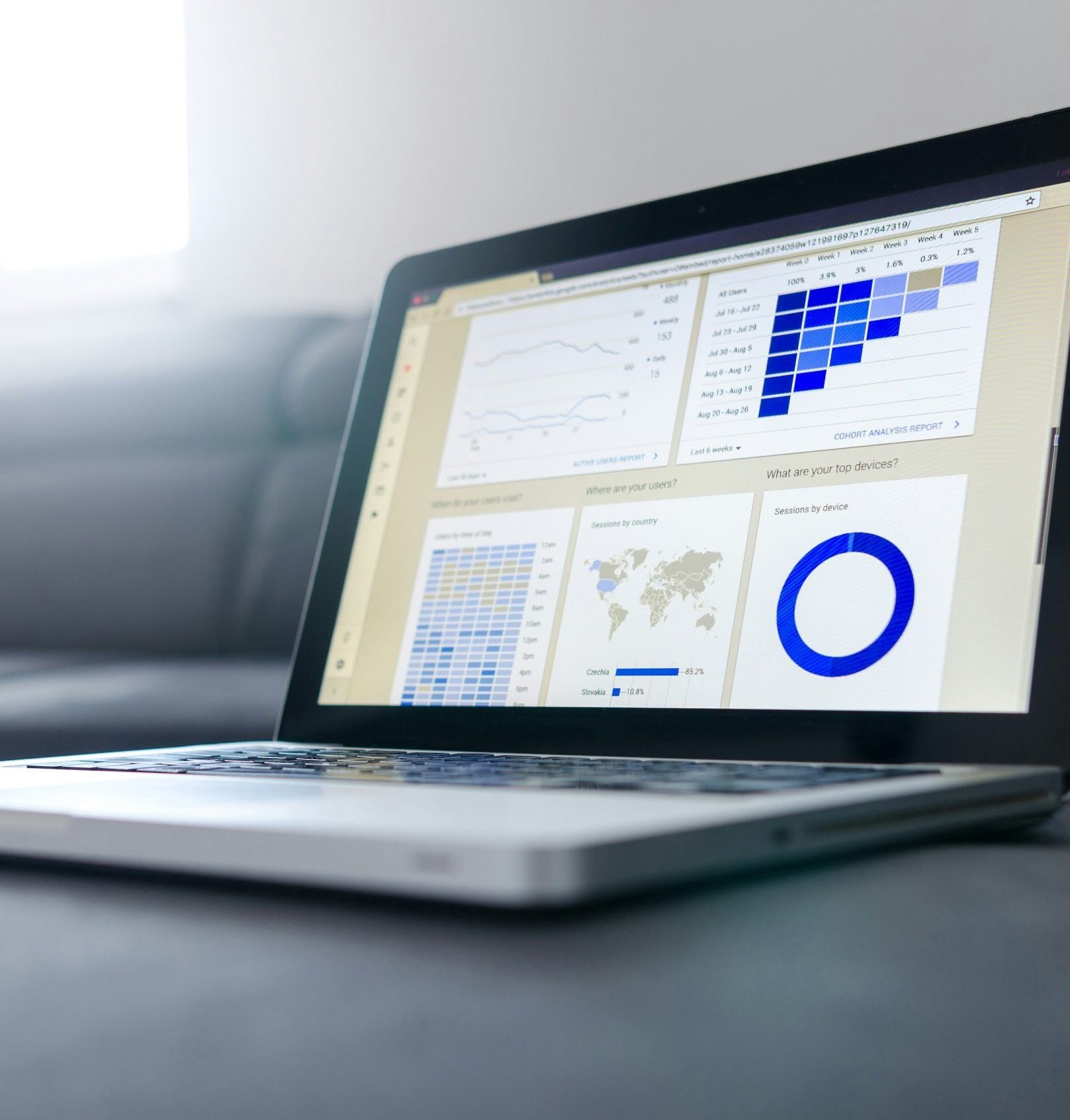
Des tableaux de bord permettent de suivre les principaux indicateurs opérationnels et financiers :

  • prestations réalisées,
  • interventions en retard,
  • absences,
  • remplacements,
  • incidents,
  • réclamations,
  • rentabilité des contrats.

Les responsables peuvent ainsi prendre des décisions à partir de données fiables et actualisées.

Groupe Senef, une solution métier dédiée aux entreprises de services terrain

Grâce à ses solutions spécialisées, Groupe Senef aide les entreprises de services terrain à centraliser leurs données, coordonner leurs équipes et piloter leur activité plus efficacement. Ses logiciels s’adaptent aux contraintes propres à chaque secteur tout en intégrant progressivement l’intelligence artificielle.

Les logiciels du groupe Senef spécialement conçus pour les sociétés de service terrain

Ils permettent notamment de centraliser les informations, de faciliter la communication entre les collaborateurs et de suivre les opérations en temps réel. Cette approche métier évite aux entreprises de devoir adapter leur organisation à un outil généraliste.

Les fonctionnalités des logiciels métiers du groupe Senef peuvent être adaptées à différents secteurs d’activité : 

Dans tous les corps d’activités, une solution métier permet de réduire les tâches administratives, de limiter les erreurs de saisie et d’améliorer le pilotage de l’activité.

Comment Groupe Senef introduit-il l’intelligence artificielle dans ses solutions ?

Groupe Senef intègre l’intelligence artificielle dans ses progiciels pour simplifier le quotidien des entreprises de propreté, de sécurité et de services à la personne.

Cette technologie intervient notamment pour :

  • Simplifier le recrutement : en identifiant automatiquement les documents transmis, en les comparant et en créant la fiche du salarié,
  • Optimiser les plannings : grâce à une replanification intelligente capable de rechercher un remplaçant selon la distance, le contrat ou les compétences,
  • Faciliter le pilotage de l’activité, avec des tableaux de bord alimentés par des données actualisées en temps réel,
  • Accompagner les utilisateurs : grâce à un assistant IA intégré à l’ERP pour rédiger des contenus, répondre aux demandes, consulter ou extraire des informations,
  • Améliorer l’affectation des tâches, en tenant compte des contraintes opérationnelles,
  • Exploiter les échanges vocaux, avec la retranscription multilingue et la détection de mots-clés prédéfinis afin de déclencher des alertes.

Ces fonctionnalités permettent aux équipes de gagner du temps, de fiabiliser les informations et de prendre des décisions plus rapidement. Groupe Senef poursuit également ses développements IA autour de la fiche client et de l’analyse des contrôles qualité. 

Souhaitez-vous découvrir comment les solutions du Groupe Senef peuvent répondre aux besoins de votre entreprise ?

CTA : Contactez nos experts

By |2026-08-03T11:24:51+02:00August 3rd, 2026|Article|0 Comments

Head office-field coordination: a sustainable performance lever for companies

In multi-site organizations, performance is not decided solely at head office. It's built up in the field, where teams operate, carry out their tasks, deal with unforeseen circumstances and represent the company to customers.

But here's the thing: the more the business grows, the more complex coordination becomes.

So how do you ensure structured management of field teams without rigidifying the organization ?

How do you supervise mobile staff while maintaining commitment and efficiency?

And above all, how to transform this coordination into a genuine driver of sustainable performance ?

The answer lies in a subtle balance: clear management, fluid processes and a functional tool capable of supporting the business without weighing it down.

Why has field team management become a strategic issue?

Field teams are now at the heart of value creation. In many sectors, such as cleaning, personal services and private security, the quality of the work carried out on site has a direct impact on the success of your business. customer satisfaction and the sustainability of contracts.

Employees in the field guarantee :

  • business continuity, even in unforeseen circumstances
  • compliance with contractual commitments
  • quality perceived by the end customer
  • corporate image and credibility

Unlike sedentary personnel, mobile teams operate in an unstable environment. They have to cope with geographical dispersion, emergency management, time pressure and sometimes a high degree of autonomy in carrying out their tasks.

In this context, the management of field teams cannot be limited to simple administrative follow-up. It becomes a strategic challenge. Without clear visibility of actual activity, head office has difficulty anticipating needs, adjusting resources or measuring operational performance.

But how can you effectively control what you can't see? A smooth coordination between management and the field transforms this complexity into a competitive advantage. It gives the company a capacity for anticipation, adaptation and optimization that makes all the difference in demanding markets.

Disengagement, disorganization, loss of performance: the risks of poor coordination

When coordination is based solely on informal exchanges, e-mails or isolated spreadsheets, malfunctions appear quickly. Information flows poorly, responsibilities are blurred and management becomes reactive rather than proactive.

Operational consequences

On an operational level, the effects are tangible, with the risk of poorly executed or duplicated tasks due to a lack of shared visibility. Companies can also experience delays due to poorly transmitted information or badly updated schedules. Not to mention the time wasted correcting errors rather than managing the business.

Human consequences

The impact is not just technical: it's also human. 

A field team lacking clear instructions or feedback on its work can gradually lose motivation. Lack of coordination creates a feeling of isolation. Employees have the impression of being subjected to head office decisions rather than contributing to them. 

In the medium term, this means :

  • a loss of meaning and commitment
  • an increase in turnover
  • a deterioration in service quality
Economic consequences

Business repercussions quickly follow. 

A poorly structured organization leads to lower productivity and higher costs. invisible additional costs These include unanticipated overtime, corrective action, contractual penalties or customer tensions. Don't forget that a deteriorating customer relations can precipitate the end of a contract, and damage the structure's reputation. 

So poor coordination is not just an organizational problem. It directly affects the overall company performance.

The levers of effective, sustainable field management

Implementing effective management of field teams requires action on organization, managerial culture and tools.

A clear framework for mobile teams

The first lever is to make the framework explicit. The roles, responsibilities and field procedures must be formalized. Clear management reduces grey areas and makes task execution more secure. Every employee needs to know what is expected of him or her, and by what deadlines and quality standards.

A clear, usable view of the terrain

The second lever is based on quality of information feedback. Without reliable data and established processes to pass it on to management, performance is difficult to assess, analyze and improve. Management becomes uncertain, and decisions are based more on intuition than on measurable facts. 

Head office therefore needs to have a reliable, up-to-date view of the terrain in order to adjust its choices. 

This implies structured follow-up : 

  • working hours
  • of interventions carried out
  • and any incidents
Autonomous and supervised teams

Effective management does not mean constant control. On the contrary, it's about giving field teams a sense of supervised autonomy. An autonomous but isolated team can drift. An autonomous, well-equipped team performs better.

A mastery of social and regulatory obligations

Finally, the respect for the legal framework is an essential pillar. Management must integrate obligations linked to labor law, traceability and HR compliance. Rigorous organization protects the company, while ensuring the safety of its employees! 

In short, sustainable field management is based on four balances:

  1. Structure without rigidity.
  2. Empowering without losing control.
  3. Measuring performance without complicating management.
  4. Integrate respect for the legal framework as the basis for coordination.

Centralizing without rigidifying: the key role of digital tools in headquarters-field coordination

On a small scale, an organization can operate with dispersed tools. But as soon as the number of sites, interventions or teams increases, limits appear. Do you know why? 

Because fragmented systems lead to :

  • increased re-keying and risk of errors
  • a lack of instant insight into the field
  • difficulty optimizing schedules and resources
  • constant juggling between Excel, e-mails and calls
  • a growing administrative burden for the head office

Hence the importance of complete business software, dedicated to managing field teams. Far from being an additional constraint, it is, on the contrary, a lever for efficiency.

A high-performance tool makes it possible to centralize data, of reliable information and’improve coordination. The head office has a real-time vision and consolidated indicators for activity management. Teams in the field can easily access their missions, report adjustments and track their priorities.

The benefits are twofold: time savings for support functions and simplification of day-to-day operations!

Keep in mind that digitalization doesn't replace management, it reinforces it. It converts data into decision-making support, optimizing the organization without weighing down processes.

How do Groupe Senef's solutions transform head office/field coordination into a performance driver?

Groupe Senef's solutions are in line with this approach: helping companies to structured, efficient and sustainable management of field teams.

By concentrating task, schedule, time and activity information in a single software package, the organization benefits from a coherent, global vision. This centralization optimizes day-to-day management and reduces the risk of errors.

The links between support functions, managers and field teams are more fluid. Decisions are based on reliable, up-to-date, usable data. Managers can analyze performance gaps, identify areas for improvement and adjust resources according to real needs.

In practical terms, this means :

  • better anticipation of workloads and priorities
  • a reduction of administrative tasks with low added value
  • precise monitoring of work carried out
  • a continuous improvement in operating performance

Employees in the field gain greater autonomy and visibility. Head office regains its capacity for strategic anticipation. Coordination ceases to be an operational hindrance, and evolves into a strategic priority. a powerful engine of transformation.

In short, better coordination for better performance!

In an environment marked by geographically dispersed teams, organizational complexity and increasingly demanding customers, coordination is becoming a decisive factor. Today, it is a a key challenge for multi-site, operationally-intensive companies

This link between the field and head office is a key factor in the success of our business. formidable engine : 

  • efficiency, as it allows you to optimize resources and manage time more effectively 
  • commitment, because it gives teams visibility and meaning
  • quality, because it secures execution and enhances customer satisfaction

Companies that choose to invest in a structured management approach, supported by tools adapted to the realities of the field like Groupe Senef's solutions, give themselves a sustainable competitive edge.

The question is no longer whether coordination should be improved. It's a question of determining how to make it a fully-fledged strategic lever, in the service of controlled, sustainable performance.

To contact us, click here: Marketing@groupesenef.com

Follow us on LinkedIn 

By |2026-04-29T15:50:11+02:00March 6th, 2026|planning|0 Comments

Digitizing business management: a concrete lever for saving time, improving reliability and boosting performance

In sectors where performance depends on human coordination, such as private security, SAP or cleaning, every minute counts. Company managers and their operational teams are constantly juggling between schedule management, and customer expectations.

In this context, digitizing managing your business is no longer a distant project reserved for large organizations: it's a must if you want to remain competitive, reliable and profitable. 

But where to start? And above all, what is digital transformation really change the day-to-day lives of managers and their teams?

Why traditional management limits company performance

Before talking about solutions, we need to identify the problem. Many service companies still operate with a stack of disparate tools: Excel files for scheduling, e-mail exchanges for instructions, paper documents for round reports, payroll software not connected to the rest of the information system... The result?

Information is fragmented, teams work in silos, and the operational visibility is deteriorating. Everyone has part of the truth, but no one has the whole picture.

Multiplication of tools and information silos

One of the first obstacles to performance in a multi-site organization is precisely this. multiplication of tools unconnected. A sales manager managing quotations on a spreadsheet, an operations manager tracking interventions on another piece of software, and an HR department processing absences by e-mail: this siloed way of working creates permanent breaks in information. Each employee wastes precious time searching for data that the organization should be able to centralize and share instantaneously.

Manual re-keying and risk of error

Manual re-keying is one of the most underestimated hidden costs in the company management services. When information is entered several times in different systems, the risk of error increases proportionally. An error on a shift hour, a customer billed at the wrong rate, an agent incorrectly assigned to a site: these seemingly minor discrepancies have real consequences on profitability, customer relations and compliance. Reducing re-typing means reduce errors, and the resulting corrective action, litigation and costs.

Lack of real-time visibility

A manager who makes decisions on the basis of partial information, or information that is several days old, is not piloting his company: he is suffering from it. The ability to react quickly relies on a vReal-time visibility of activity. Without the right tools, this responsiveness is impossible to achieve systematically.

Digitizing to save time every day

The first promise of digitalized business management is time. Time reclaimed from non-value-added tasks, redistributed to what really counts: management, customer relations and business development.

Automate repetitive tasks

Visit automated billing, real-time activity monitoring, the administrative management employees: all these tasks can be partially or fully automated using appropriate business software. 

Automation does not replace teams: it frees them from time-consuming tasks so that they can concentrate on higher-value missions. An HR manager who no longer has to re-enter hours worked can devote this time to recruiting, retaining or training employees.

Centralize data in a single tool

Having a centralized tool in which all business data is accessible in a single place radically changes the day-to-day life of teams. No need to juggle several applications or ask a colleague for information. Visit schedule, customer contracts, hours worked regulatory documents Everything is in one place, structured and accessible to the right people. It's a tangible improvement in efficiency, measurable from the very first weeks of use.

Streamline coordination between teams

In a company, the communication between field teams, managers and top management is a critical issue. An agent who doesn't receive his instructions on time, a site manager who isn't informed of a schedule change, an operations manager who learns too late that a position is vacant: these situations degrade service quality and expose the company to operational risks. A digital tool The well-configured system makes these exchanges more fluid, structures communication and reduces the need for informal solicitations.

Making processes more reliable to secure your business

In addition to saving time, digitizing processes also means making them more reliable. It means moving from an organization based on individuals to one based on systems. This shift is essential for supporting growth without losing quality.

Standardize procedures

When procedures are not formalized and equipped, each employee interprets them in his or her own way. Standardizing business processes via a software ensures consistency in the execution of tasks, whatever the agent or site concerned. This is particularly strategic in a sector where regulatory compliance is a must, and where any deviation can have legal and commercial consequences.

Ensure traceability of actions

In some sectors, the traceability is an imperative. Every intervention, every round, every report must be traceable, dated and validated. A digital tool natively integrates this logic: it preserves the history of actions, enables tasks to be tracked in real time, and facilitates internal control. In the event of a dispute or audit, the data is there, reliable and accessible. It's a operational safety that paper-based systems simply can't offer.

Reduce errors and hidden costs

Fewer errors mean fewer corrections, fewer disputes, and better regulatory compliance. Visit hidden costs related to management errors are often underestimated in company balance sheets. Yet they weigh heavily on real profitability. Digitizing management means tackling these costs directly, structurally and sustainably.

From digitalization to measurable performance

The true value of a digital tool lies not in its functionality, but in the results it produces. And the good news is that these results are measurable.

Use data to manage your business

A manager who has reliable data, centralized and exploitable in real time makes better decisions. It can quickly identify under-performing sites, the busiest agents, the least profitable customers or at-risk positions. This ability to analyze transforms the way the company is managed, moving from a "one-stop shop" to a "one-stop shop". control from instinct to indicator-based management. Choices are more informed, actions more targeted, results more predictable.

Improving customer relations

A well-served customer is a customer who stays. Digitizing management directly improves quality of service perceived: intervention reports are transmitted in real time, anomalies are reported immediately, and requests are processed more quickly. Reactivity improves, as does reliability. And in a sector where trust is the primary criterion for choosing a service provider, this is a real plus. competitive advantage decisive.

Optimizing resources and time

Better visibility of activity also enables better allocation of human and material resources. Field staff are assigned in a more relevant way, schedules are optimized, and absences are anticipated rather than suffered. Organization becomes smoother, and teams work under better conditions. Which, in the end, reduces turnover and improves service quality.

Digitizing intelligently: avoiding over-digitization

It would be misleading to suggest that accumulating digital tools is all it takes to perform. The reality is more nuanced...and more demanding.

The dangers of tool stacking

Adding a new tool to an already complex system often exacerbates the problem rather than solving it. A CRM that doesn't talk to the scheduling software, a mobile application disconnected from the back-office, a reporting tool that imports data manually from another system: this piling up creates complexity, generates new errors and adds to the workload of the teams. The performance comes not from the number of digital tools, but from their coherence.

The importance of a structuring software base

What's needed is a foundation central software that links processes, data and teams in a single, coherent environment. A well-designed business ERP does just that: it structures the business, makes exchanges more fluid and enables operational performance to be steered in a sustainable way. It is precisely this logic that has guided the design of Groupe Senef solutions since their inception.

Groupe Senef: digitalization designed for operational performance

Groupe Senef is a publisher of business software solutions specialized in human-intensive service sectors. For over fifteen years, the group has been working with companies in the following sectors private security, of cleanliness, from personal services and autonomy and other demanding verticals. digital transformation. Not from theoretical models, but from realities on the ground.

Centralization of business processes

With Mushroom (private security), Progiclean (cleanliness) and Progisap (SAP), scheduling, assignment management, invoicing and activity monitoring are all integrated into a single digital environment. Gone are the days when data was scattered across several tools: everything is connected, accessible and consistent. Operational managers gain in responsiveness, field teams gain in clarity, and management gains in control.

Automation and data reliability

Groupe Senef's solutions natively integrate mechanisms for’automation that reduce manual tasks, limit the risk of error and ensure regulatory compliance. Traceability is guaranteed at every stage: every action is time-stamped, every document retained, every modification logged. It's a direct response to the demands of sectors where rigor is not an option.

Real-time vision for managers

The strategic management of a company depends on reliable data that can be accessed at the right time. The real-time dashboards offered by Groupe Senef's solutions give managers a unified vision of their business, from the field to head office, so they can take the right decisions at the right time. anticipate risks and seize opportunities. This is what Groupe Senef sums up in one simple conviction: technology doesn't create performance, it makes it possible by aligning teams, data and operations.

Conclusion: digitizing to structure and accelerate performance

Digitizing your business management is not a revolution that happens overnight. It's a gradual, structured approach, rooted in the realities of the field. But the benefits are concrete, measurable and lasting: time saved on low-value tasks, more reliable processes, better-informed decisions and stronger customer relations. The right partner can make all the difference.

To contact us, click here : Marketing@groupesenef.com

Follow us on LinkedIn 

By |2026-04-29T15:49:37+02:00March 5th, 2026|Article|0 Comments
Go to Top